

Maya gets a useful lead summary from her agent. The next morning she has to paste the policy again, find the source sheet and explain where to save the result. (Illustrative example.)
The missing piece is the working setup around the model. Building that setup is called harness engineering.
1. Put the job and rules within reach
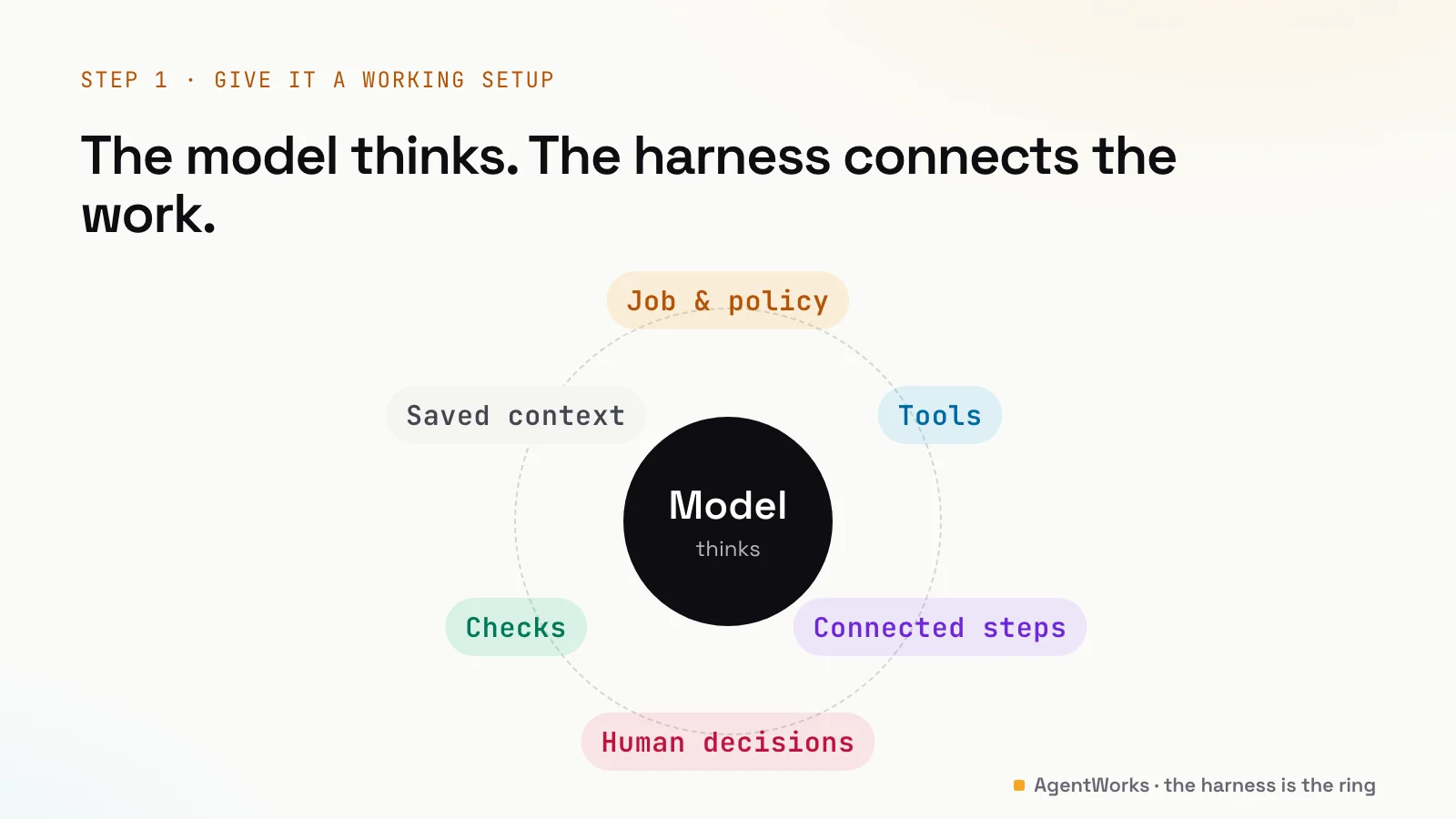
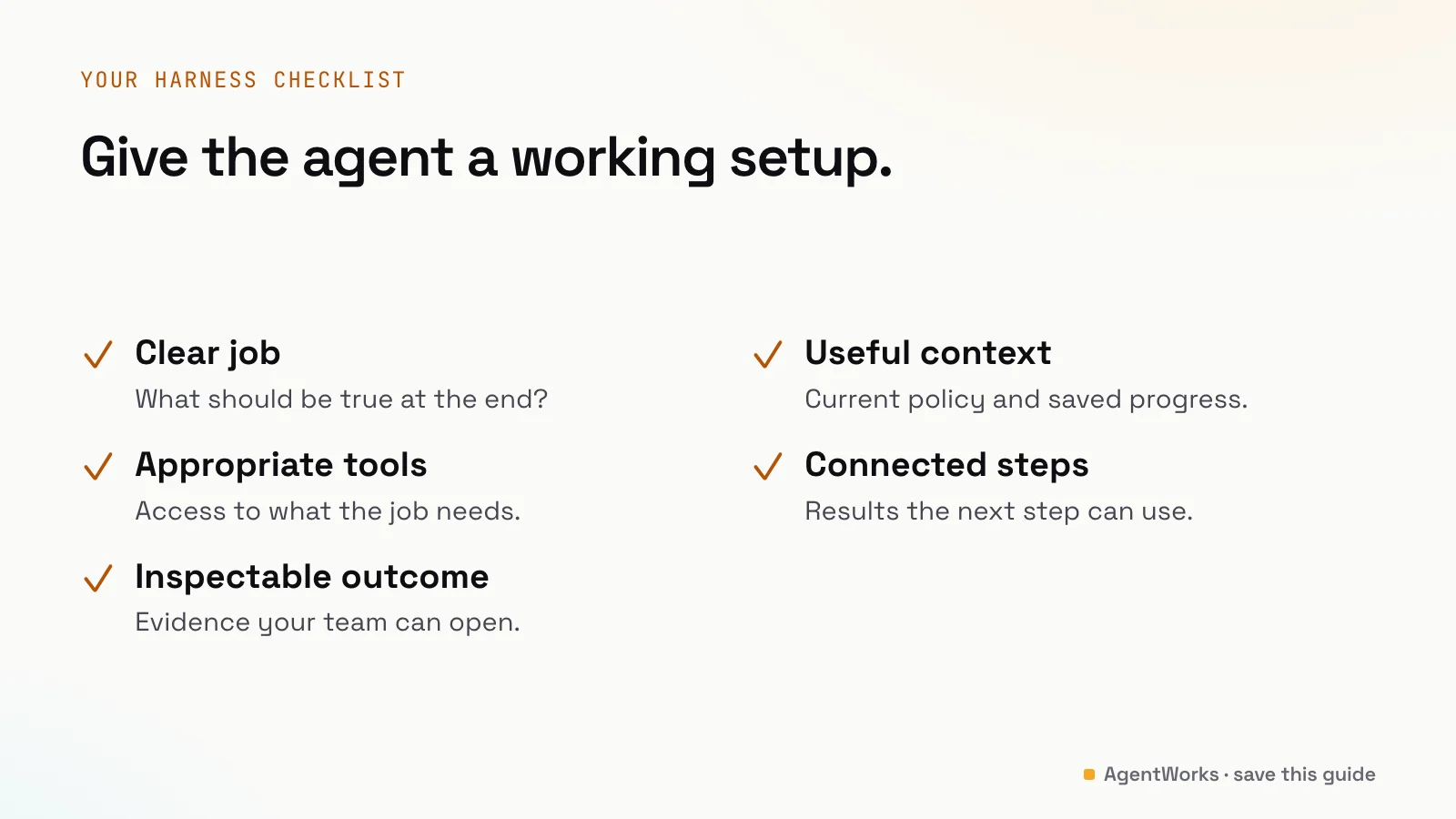
Write down the job, the current policy and what a useful result looks like. Give your agent access to those materials and the tools it actually needs.
Your team should not have to rebuild that context in every chat.
2. Connect the steps
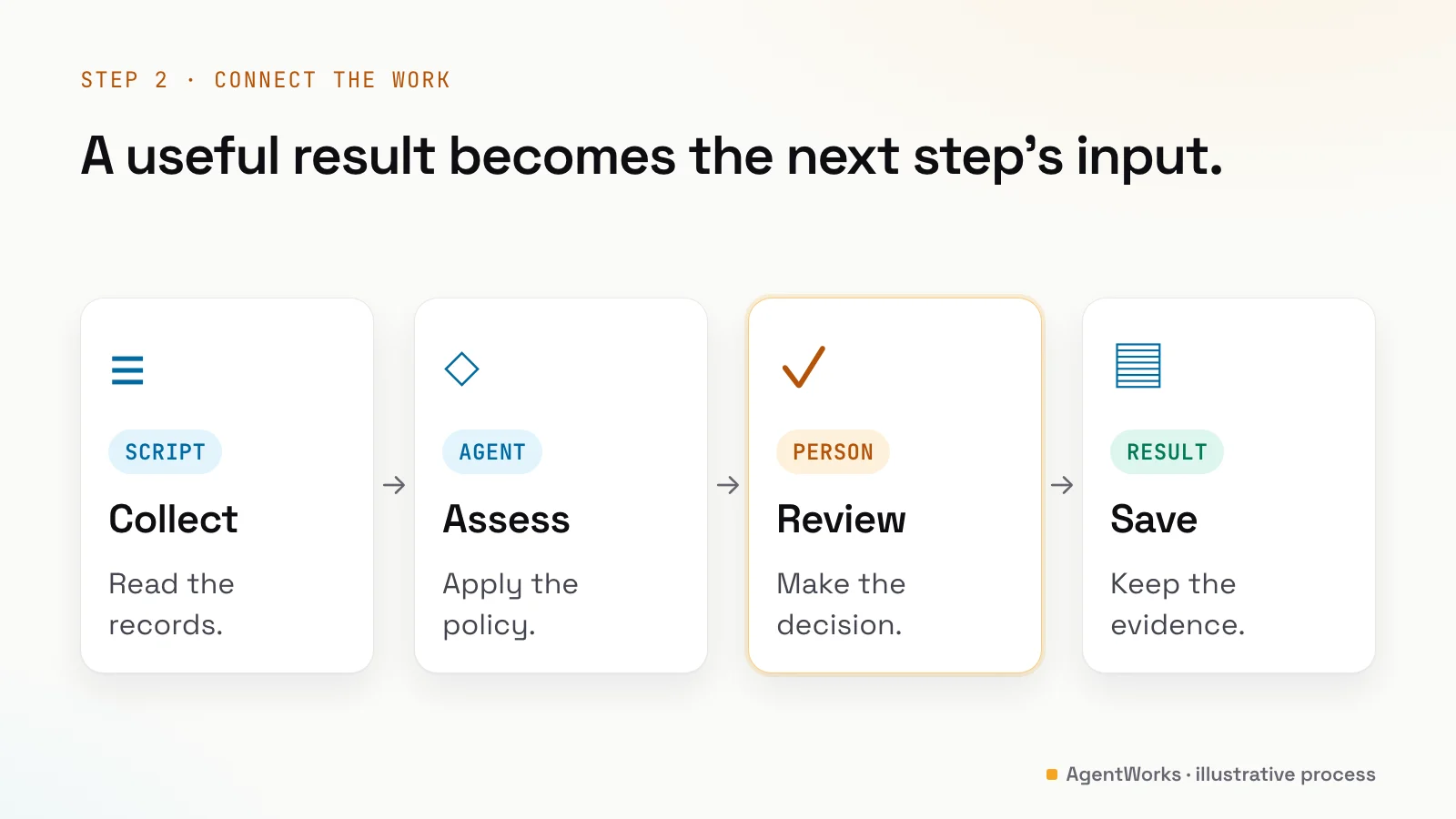
Use a fixed step for predictable work, such as fetching records. Let an agent handle judgment, such as assessing an enquiry. Put a person where your process needs a decision.
Pass a saved result between steps, not a vague “done”.
3. Check the result and keep the record
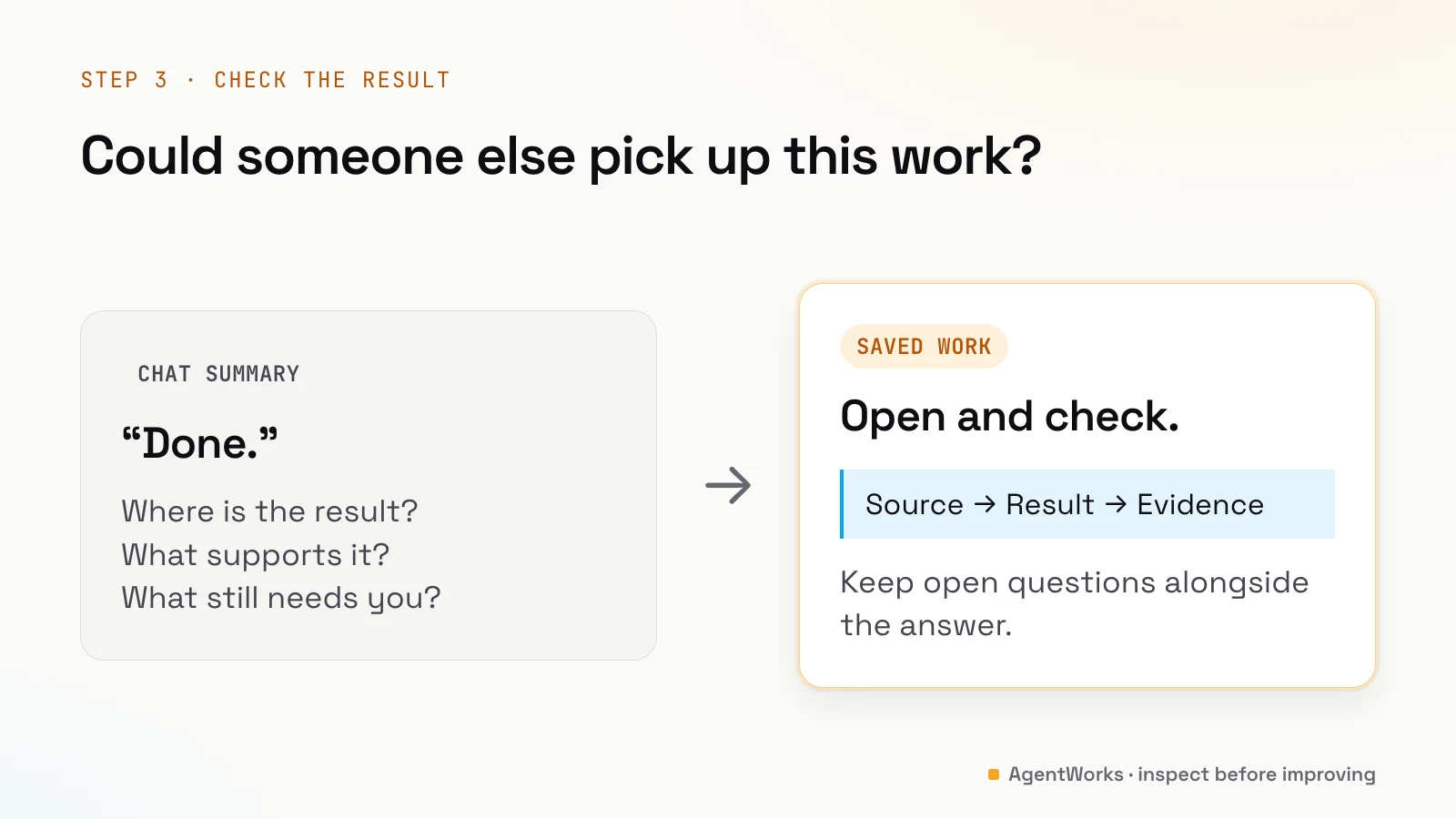
Open the output and compare it with the job. Keep the source, result and any unresolved question together.
When something fails, fix the missing input, unclear rule or broken step. Changing the model is only one possible response.
How AgentWorks does this
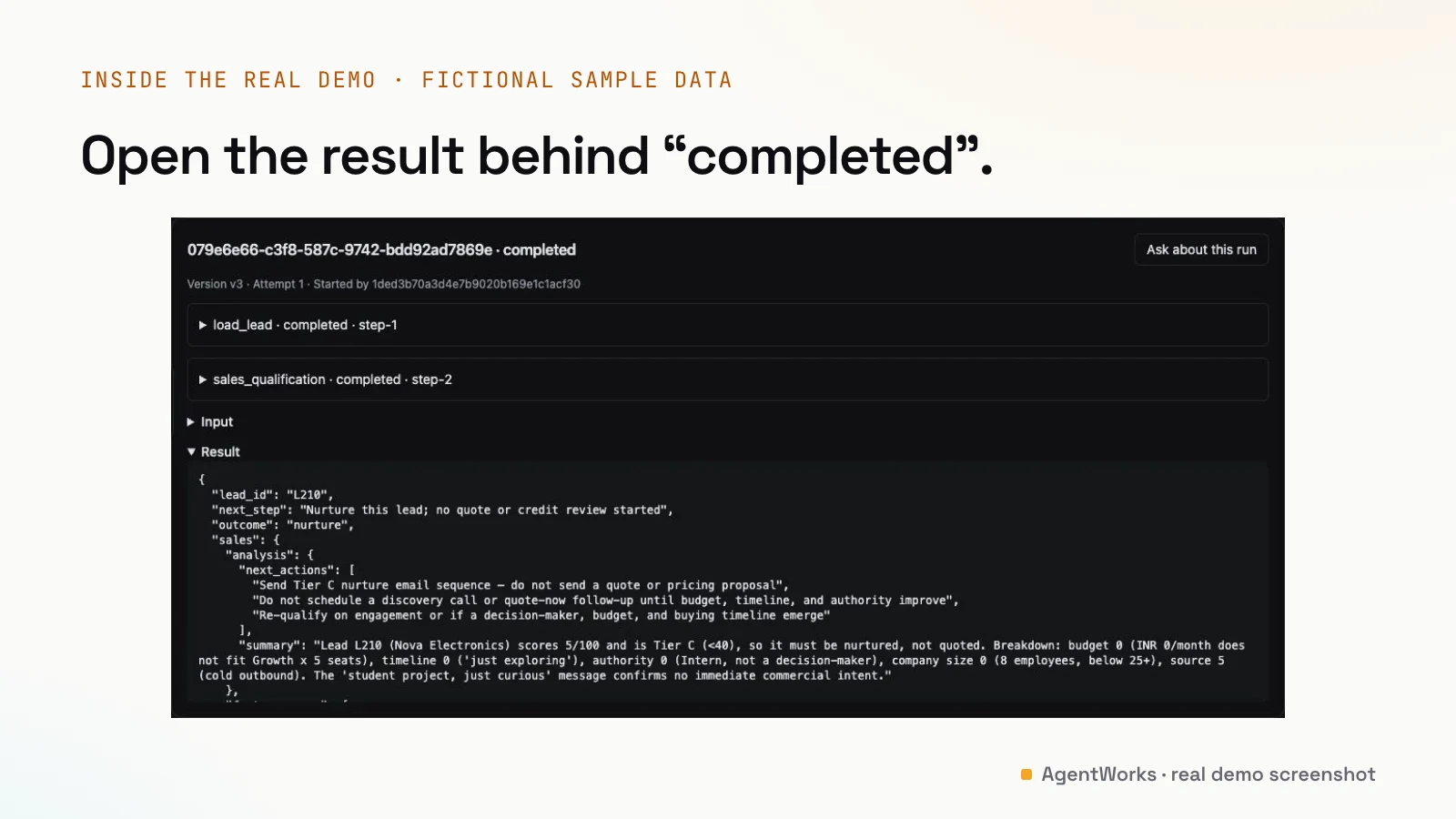
In AgentWorks, the work can live in a shared process with instructions, tools and saved results. The demo’s Deal desk Flow shows its steps beside the recommendation they returned.
That is the useful part of a harness: your team can open the work and inspect it.
Save this harness checklist
Before adding another agent, check that the existing one has what it needs to do the job and leave a useful result.