
Contents
Guides
Set your first goal
What you'll do: describe the outcome you want in one sentence, and turn it into a goal your crew works toward every day.
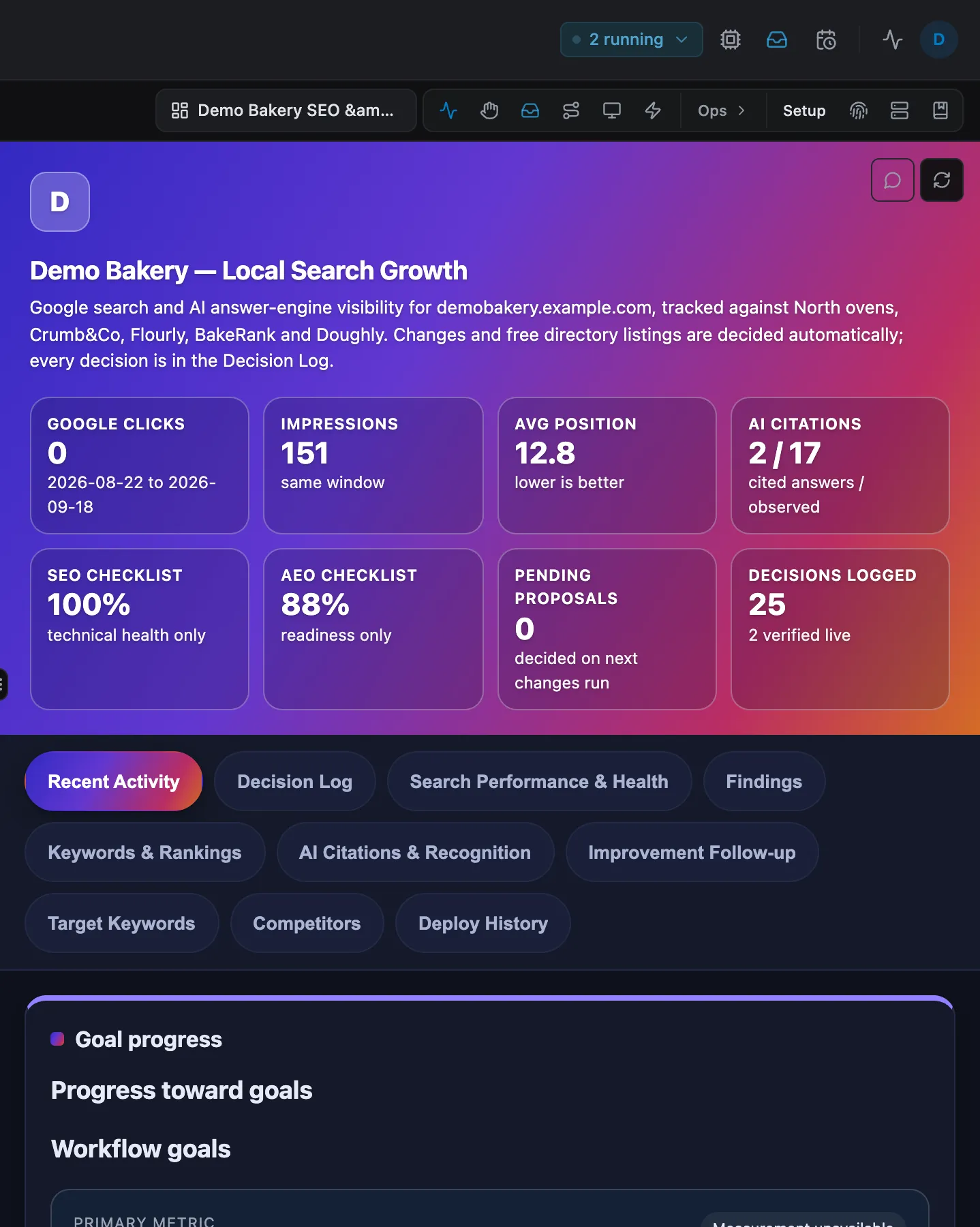
A goal has four parts: the outcome in plain words, one metric that proves progress, a target to hit, and rules that must stay true while the work runs. Everything AgentWorks does — plans, runs, measurements, improvements — hangs off that goal.
Steps
- Say the outcome. Write one sentence a teammate would understand, for example "Book more sales demos." If it is vague to a person, it is vague to an agent — pick the smallest outcome that still matters.
- Pick the metric. Choose one number that moves when the outcome improves, for example "booked demos per week." One primary metric beats five supporting ones; you can add supporting measurements later.
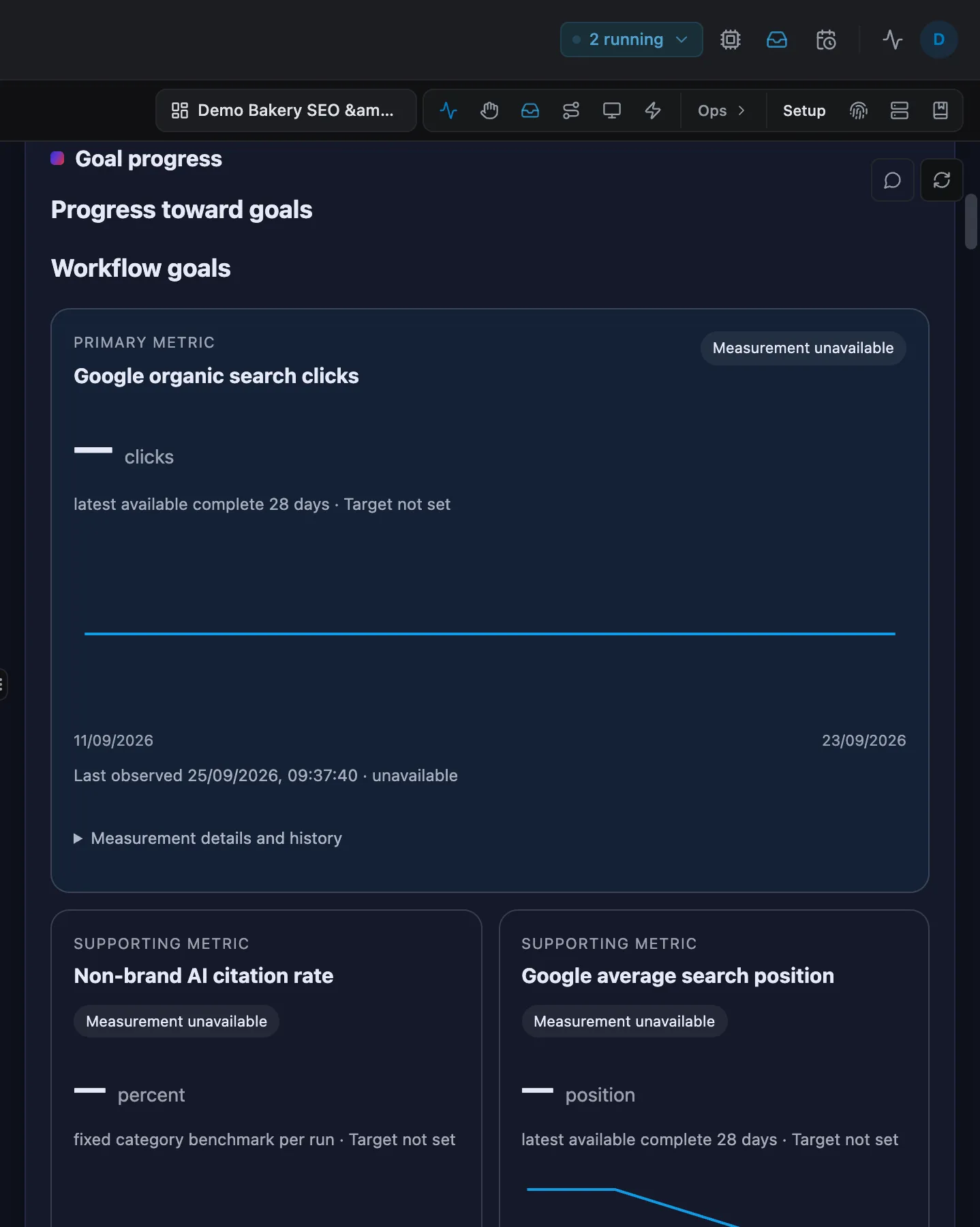
- Set the target. Give the metric a number and a date, for example "12 booked demos per week by end of next month." The crew measures every run against this target, so make it ambitious but reachable.
- Add rules that must stay true. These are your boundaries, for example "never email the same lead twice in one week" or "key accounts always need my approval." Rules apply at every autonomy level, including Full.
- Review the plan. Your crew proposes the steps, the schedule, and how it will measure the metric. Read it, ask for changes in plain words, and approve it when it looks right.
- Run, then read the first report. The crew runs the plan, collects the metric from its source, and reports what it did and what changed. The first run sets your baseline.
What happens next
After the baseline, Auto-improve takes over the routine: it reviews run evidence against your target, repairs broken steps, drops approaches that did not work, and proposes bigger changes for your approval. You manage by exception — check the progress report, approve what matters, and adjust the target when the business moves.
FAQs
What makes a good metric? One you already trust. If you run the business on booked demos, pipeline value, or tickets closed, use that. Avoid metrics nobody can observe — the crew has to collect the number from a real source on every run.
Can I change the target later? Yes. Targets, metrics, and rules can all change after the goal is running. Past measurements stay attached to the old definition so your history is never rewritten.
What if the metric can't be measured yet? Say so in the goal setup. The crew will tell you what is missing — usually access to a tool that holds the number — instead of guessing. Never accept a metric with no source.
Do I need a premade agent first? No. A goal works on its own. If a premade agent fits your task, install it and point it at the same goal — it will adopt your metric, target, and rules.
Need help? Book a call and we'll set up your first goal with you.